Find the best consumer camcorders and accessories all in one place
E-mail Print PDF

Olympus E-30 Digital Camera

 
Editor rating
 
0.0 User rating
 
0.0 (0)
dividerbar2

Express Your Creativity With Art Filters

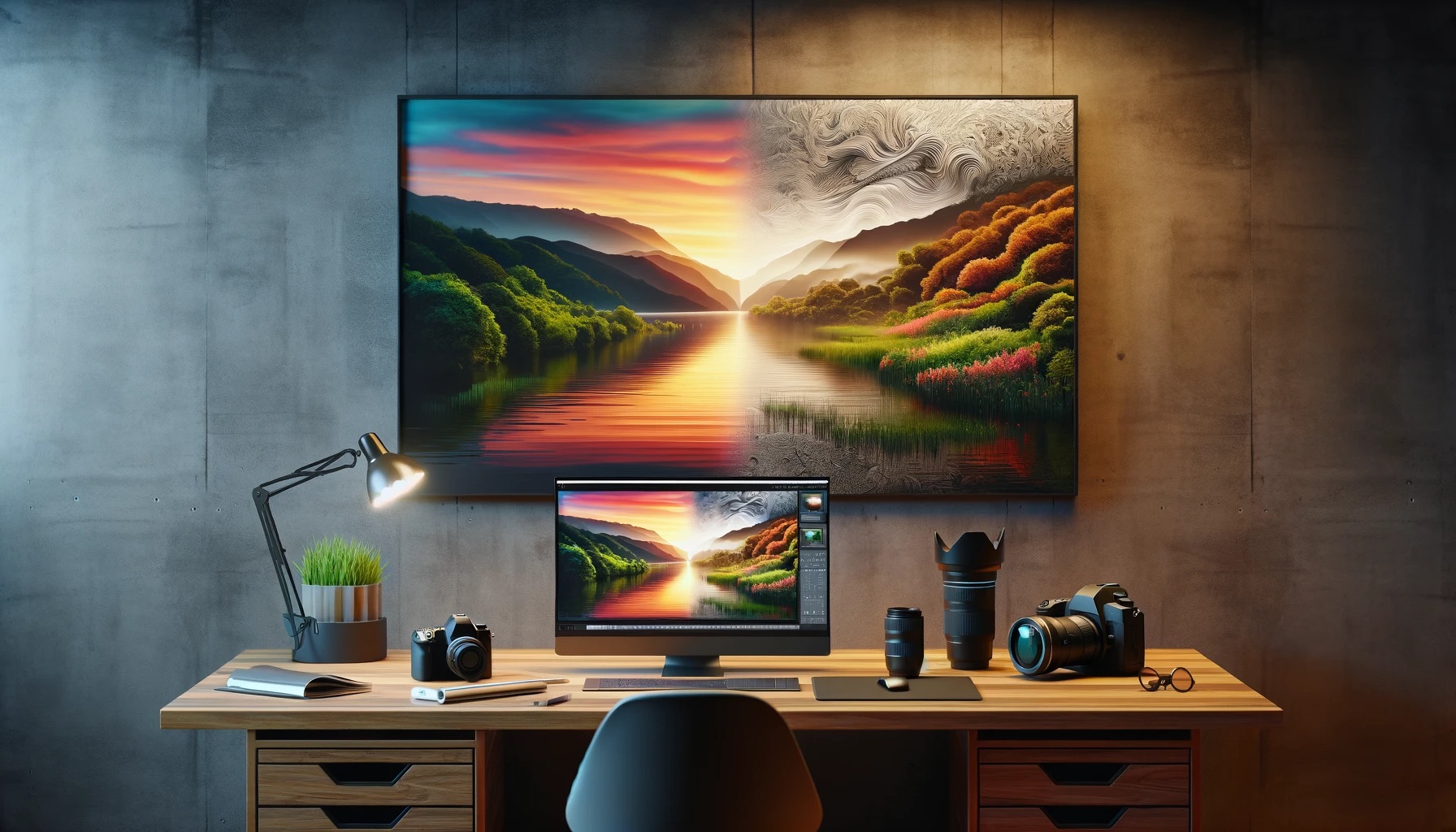
New to the E-30, is technology that conveniently helps you transform a basic image that faithfully represents the scene into an image that carries emotional impact. The new Art Filters take this expressive ability to a higher level, replicating six dramatic effects as you shoot using the Autofocus Live View LCD. Pop Art: Enhances colors, making them more saturated and vivid, creating high-impact pictures that express the joyful, lighthearted feeling of the Pop Art style of the 1960s. Soft Focus: Creates an ethereal atmosphere that renders subjects in a heavenly light without obscuring details. Pale & Light Color: Encloses the foreground of an image in flat gentle light and pastel colors reminiscent of a flashback scene in a movie. Light Tone: Renders shade and highlight areas softly to lend an elegant air to the subject. Grainy Film: Evokes the feeling of documentary footage shot in monochrome with grainy, high-contrast film. Pin Hole Camera: Reduces the peripheral brightness of an image as though it were hot through a pin hole, connecting the viewer intimately with the subject at the center of the picture.

Product Features

  • 6 Art Filters
  • Evolving Live View: Autofocus Live View with Face Detection and Shadow Adjustment Technology
  • Swivel Live View LCD: Freedom to Move You
  • Olympus In-body Image Stabilization
  • Multi-Aspect Ratio Shooting
  • Digital Leveler: The Three-Axis Sensor Detects the Slightest Tilt of the Camera Body
  • On the Fast-Track, with 11 Point Twin Cross Sensor and SWD Lenses
  • 12.3-megapixel Live MOS Imager
  • Proven Dust Reduction System
  • TruePic III+ Image Processing
  • Program Camera Control (Landscape, Sport Action/Sport, Night Scene Portrait, Macro)
  • 5 Metering Modes (Matrix, Center Weight, Spot, Spot+Highlight, Spot+Shadow)
  • Wireless Flash
  • Dual Card Slot
  • Shutter MTF
  • PC Flash Sync
  • AF Focus Adjustment: use the AF sensor (when set to [Hybrid AF] or [AF Sensor]) to fine-adjust the focusing position to a range of ±20 steps
  • Lens Data Set: fine-adjust the AF for each lens. You can register the adjustment values for up to 20 lenses.
  • Focus Target Selection
  • AE Fine Adjustment
  • Smooth Live View (Frame Rate): change the frame rate of the Live View display
  • Customizing of information display: change what appears when you select the ”INFO” button
  • Customized Battery Check Level: for use with the HLD-4 Battery Grip
  • 34 languages

Autofocus Live View

Two innovative technologies merge to create a unique digital experience. The advanced Live View Autofocus works as seamlessly as a point-and-shoot to display subjects, in focus, on the LCD the instant the shutter is pressed half way. And the Swivel Live View LCD enables photographers to hold the camera away from their face and at angles they cannot easily reach by using the optical viewfinder alone. During composition, settings like white balance and exposure can be selected, and their impact is seen instantly on the LCD, thanks to Live View. Real-time monitoring offers amazing versatility and creative control.

Product Specs

Megapixels

13.1

Power Source/Battery

BLM-1 Li-ion battery (included)

Dimensions

5.4”(W) x 4.4”(H) x 2.2”(D)

Weight

1.4 lbs

Lens

Single-lens reflex Live View digital camera with interchangeable lens system

Live View

High speed Live MOS Sensor for still picture shooting is used, 100% field of view, Exposure adjustment pre-view, White balance adjustment pre-view, Gradation auto pre-view Face detection pre-view, Perfect shot pre-view Grid line displayable, 5x/7x/10x magnification possible, MF/S-AF, AF frame display, AF point display, Shooting information, Histogram, IS activating mode.

Viewfinder

Eye-level single-lens reflex viewfinder

Image Stabilization

Built in (Imager shift image stabilizer)

Picture Mode

Vivid, Natural, Portrait, Muted, Monotone, Custom (default setting: Natural) In custom mode, basic 5 modes and adjustment is available

Computer Interface

USB 2.0 High Speed for storage and camera control (MTP mode is available)

Shutter Speed

P(Ps), S, A, M mode: 60 - 1/8000 sec. Bulb: up to 30 min. (selectable longest time in the menu. Default: 8 min. TBD 1/3, 1/2, or 1EV steps selectable

Playback Mode

Single-frame, Index (4/9/16/25/49/100 frames), Calendar, Close-up ( 2 - 14X), Slideshow, Picture rotation (auto mode available), Light box

Olympus E-30’s Review

dpreview.com

The E-30 is the long-awaited high-end enthusiast model that fills the gap in the Olympus E-Series lineup between the E-520 and the ostensibly professional level E-3. Such is the pace of change in the digital camera market that the new model leapfrogs the E-3 by offering a higher pixel count (12MP), larger screen and improved contrast detect AF system - as well as introducing several novel features including a digital spirit level, multi exposures, aspect ratio options and a handful of built-in special image effects (’Art Filters’ as Olympus calls them). It loses the E-3’s class-leading weather sealing and has a slightly smaller optical viewfinder, but otherwise offers almost exactly the same features and performance in a slightly lighter, very slightly smaller and - at launch - similarly priced body.

Since this review was started Olympus has fleshed out the middle of its DSLR range even more with the announcement of the E-620. The E-620 takes a slightly cut-down version of the E-30’s feature set and squeezes it into an incredibly compact body that isn’t considerably bigger than the E-420. The E-30, in turn has seen hints of a coming price ’realignment’ to a level more consistent with its market position.

The E-30 goes head to head with the Nikon D300, Canon EOS 40D/50D, Sony Alpha 700 and Pentax K20D, and - on paper at least - offers a compelling feature mix in the most attractive Olympus body for a long time. But does it have what it takes to do battle with the big beasts of the digital SLR jungle, and does it really offer a viable alternative to the E-3? Let’s find out.
Compared to E-3 - key differences

Although designed to sit between the E-520 / E-620 and E-3 in the E-Series lineup the E-30 is far nearer to the latter than it is to the consumer level models - with the added beneft of a year or so of development, meaning the E-30 gets all the new toys introduced since the E-3 (most important being contrast-detect AF). The biggest differences are the body material and weatherproofing (where the E-3 wins hands down), the viewfinder (the E-3 is again the winner, though anyone moving from one of the consumer level four-thirds SLRs is going to see a huge improvement in both size and brightness) and the sensor - up from 10 to 12 megapixels. There are also a handful of new features and spec changes.

* Glass fiber reinforced plastic vs weatherproof magnesium alloy body shell
* Slightly (8mm) shorter and around 115g lighter
* Slightly smaller viewfinder with reduced frame coverage
* New 12MP LiveMOS sensor (E-3: 10.1 MP)
* Brighter and larger LCD screen
* E-30 has a mode dial
* Art Filters, multiple exposures, aspect ratio options and lots of scene modes
* No card door lock, no eyepiece shutter
* AF fine tuning for up to 20 lenses (and per AF point!)
* Built-in digital level guage
* Contrast detect (Imager) AF with face detection
* Slightly reduced raw buffer size (12 frames)
* Adds vertical panning mode to stabilizer (IS3)

Compared to E-620 - key differences

The E-620 offers a lot of the E-30 condensed into a smaller, more consumer-friendly body. The viewfinder is smaller, but the cameras share the same 12 megapixel sensor, Truepix III+ processing and a great many other features. The differences between the two cameras are easier to list than the similarities:

* E-30 is larger (by around 1cm in each dimension) and around 180g heavier (body only)
* Visibly larger viewfinder with better frame coverage (E-620: 0.96x, 95%, E-30: 1.02x, 98%)
* 11-point (all cross-type) vs 7-point AF (5 cross-type)
* E-620 actually has slightly improved LCD (Hypercrystal III, vs. E-30s’ version II unit)
* Two control diasl (E-620 only has one)
* Faster continuous shooting rate and larger buffer
* Fewer aspect ratio crops (3 vs. 8)
* No built-in digital level gauge
* Only allows two exposures to be overlaid in multi-exposure mode (vs. 4)
* No PC flash sync or DC-in sockets
* Slower x-sync (1/180 sec vs. 1/250 sec) and max shutter speed (1/4000 sec vs. 1/8000 sec)
* Lower capacity BLS-1 battery (7.2V 1150 mAh) vs. BLM-1 (7.2V 1500 mAh)

Key feature comparison (vs E-3 and E-620)

Olympus now offers one of the roundest, fullest digital SLR lineups on the market, with a relatively logical progression from the entry-level E-420 to the flagship E-3. Where Olympus is slightly different to other manufacturers is that you rarely see much difference in sensor resolution from model to model (we’d expect the entire range to be 12 megapixels by the end of the year - and to stay there for quite some time). Instead moving up the range gets you gradually better viewfinder, gradually more advanced features and more sophisticated controls, higher performance, and an increasingly large body design with increasingly robust construction.

User reviews

There are no user reviews for this listing.


Powered by jReviews
 
    
Canon Powershot SD780 IS
Slimmest Digital ELPH Canon has created while staying just as powerful.

Casio EX-FS10
The EX-FS10 is the perfect camera for capturing friends and family at play.

Sony DSC-W300
This point and shoot has got it all.